

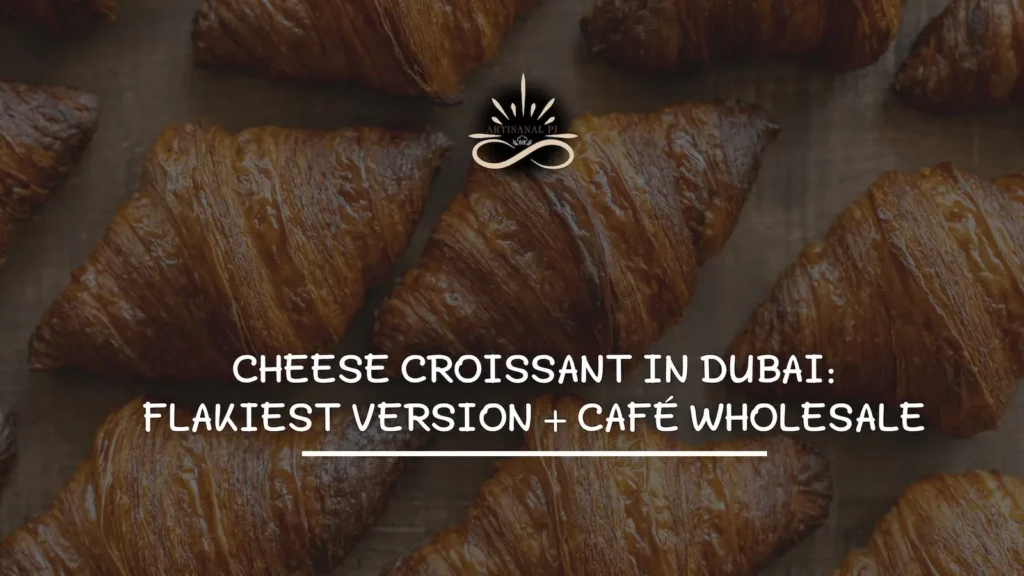
Walk into any café worth visiting in Dubai and you’ll spot a cheese croissant sitting near the front of the counter.
It’s not a trend. It’s a staple. And when it’s done right — properly laminated, loaded with quality cheese, fresh out of the oven — it’s the kind of thing people drive across the city for.
This guide breaks down what makes a truly great cheese croissant, where to find them in Dubai, and — if you’re a café owner — exactly how to source them in bulk without killing your margins or your reputation.
Why Cheese Croissants Are a Must-Have for Cafés in Dubai
Dubai’s café scene has grown up fast. Customers who once settled for a shrink-wrapped pastry from a bulk wholesaler now expect something that looks handmade, smells buttery, and tastes like someone actually put effort into it.
The cheese croissant sits right at that sweet spot — premium feel, accessible price, and consistently high demand across breakfast and grab-and-go dayparts.
Here’s why it belongs on every café menu in the UAE:
- High profit margin. Food cost on a well-sourced croissant is manageable, and selling price in Dubai’s café market comfortably sits between AED 18–28 for a premium version.
- Drives morning footfall. Breakfast is the most competitive daypart in Dubai. A standout croissant gives customers a reason to choose your café over the one next door.
- Social media visibility. A perfectly golden, cheese-pull croissant is inherently shareable. That’s free marketing every time a customer posts it.
- Pairs with everything. Coffee, juices, salads — the cheese croissant anchors an entire morning menu without needing a dedicated kitchen setup.
According to Euromonitor International’s UAE Bakery Report, premium baked goods in the UAE have grown consistently year-on-year as consumers shift from fast food toward quality café experiences.
What Makes a Perfect Cheese Croissant
This is the question most café owners don’t ask until they’ve already served a disappointing one.
A great cheese croissant isn’t just dough and cheese. It’s a technically precise product where every stage — lamination, butter quality, cheese selection, baking — has to work together.
Flaky Layers and Proper Lamination
Lamination is everything. The signature flakiness of a croissant comes from folding cold butter into dough repeatedly — a process called lamination — to create dozens of thin, distinct layers.
When lamination is rushed or done at the wrong temperature, the layers merge and you get a dense, bready result instead of that shattering, paper-thin flake. Most mediocre croissants fail here first.
A properly laminated croissant should visibly separate into layers when you pull it apart. If it tears like bread, it wasn’t laminated correctly.
High-Quality Butter and Ingredients
European butter is non-negotiable for a premium cheese croissant. French or Belgian butter with 84%+ fat content creates the clean, rich flavour profile that makes a croissant taste expensive.
Standard vegetable-based fats or low-fat butter will produce a croissant — but not a great one. The flavour is flat, the layers are greasy rather than crisp, and the finish is heavy.
The flour matters too. A higher-protein flour gives the dough enough structure to hold its lamination without becoming tough.
Cheese Filling Quality and Balance
The cheese has to melt evenly, hold its flavour after baking, and not make the pastry soggy.
Gruyère, Emmental, and aged cheddar are the most common choices for good reason — they melt cleanly, have a savoury depth that complements butter, and don’t release too much moisture during baking.
The ratio matters as much as the cheese choice. Too little and it’s just a plain croissant with a whisper of flavour. Too much and the base gets wet and the layers collapse.
Freshness and Baking Technique
A cheese croissant baked fresh and served within two hours is a completely different product from one that sat in a chiller for 24 hours and got reheated.
Freshness is the single biggest differentiator between a croissant that builds customer loyalty and one that gets left half-eaten. If you’re sourcing from a supplier, this is the first question to ask: how fresh is the product at point of delivery?
Where to Find the Best Cheese Croissants in Dubai
Dubai has no shortage of options — from hotel patisseries in DIFC to independent artisan bakeries in Jumeirah and Al Quoz.
The cafés consistently producing standout croissants share a few things in common: they either bake in-house using a proper lamination process, or they source from a specialist supplier who does.
What to look for if you’re a consumer:
- Visible, distinct layers on the outside — not a smooth, uniform surface
- Deep golden colour, not pale or uniform beige
- A slightly shattering crust when you press it — not soft or doughy
- A rich, buttery aroma before you even bite into it
What to look for if you’re sourcing for your café:
- A supplier who can tell you exactly what butter and cheese they use
- Delivery schedules that guarantee freshness at your counter
- The ability to customise — cheese type, size, flavour additions
- A track record with other café clients in Dubai
Cheese Croissant vs Za’atar Croissant vs Brioche Bun
If you’re building a pastry range for your café menu, understanding how these three products sit alongside each other is important.
| Product | Texture | Flavour Profile | Best For |
|---|---|---|---|
| Cheese Croissant | Flaky, shattering layers | Rich, savoury, buttery | Breakfast menus, all-day café staple |
| Za’atar Croissant | Crispy, slightly chewier | Herbal, tangy, earthy | Middle Eastern twist, brunch menus |
| Brioche Bun | Soft, pillowy | Slightly sweet, eggy | Sandwiches, sliders, burger-style builds |
They’re not competing products — they serve different menu moments. The cheese croissant owns the premium breakfast slot. The za’atar croissant appeals to customers wanting a regional flavour twist. The brioche bun anchors your savoury lunch builds.
A well-planned café pastry range typically features all three. Each one attracts a different customer type and covers a different daypart.
How Cafés in Dubai Source Croissants in Bulk
This is where a lot of café owners make avoidable mistakes.
Fresh vs frozen supply is the first decision. Frozen croissants baked in-store each morning can deliver a decent result — but only if the product quality is high to begin with and your team is trained to proof and bake them correctly. Most café teams aren’t set up for that.
A daily fresh supply from a specialist bakery supplier in the UAE is the more reliable route. You receive bake-ready or freshly baked product each morning, it hits the counter at peak quality, and you’re not managing a proving cabinet.
Key considerations for bulk sourcing:
- Delivery schedule. Can your supplier deliver daily, or are you looking at every two to three days? Daily is ideal for a product like croissants where freshness is the whole point.
- Shelf life. A fresh croissant peaks within two to four hours of baking. Understand your supplier’s bake time and factor that into your counter display cycle.
- Volume flexibility. Can they scale up for weekend rushes? Can they pull back during slower periods without penalising you on pricing?
- Consistency across batches. The croissant your customer had on Monday needs to taste the same on Friday. Ask suppliers for quality documentation and batch consistency records.
Choosing the Right Croissant Supplier for Your Café
Not every bakery supplier in the UAE operates at the standard a premium café needs. Here’s what separates a reliable partner from a disappointing one.
Consistency and quality control. A supplier worth working with can show you their production process, their ingredient sourcing, and their quality checks. If they can’t articulate how they maintain consistency, that’s your answer.
MOQ and pricing. Minimum order quantities should be realistic for your outlet size. A good supplier won’t force you into ordering more than you can sell — they’d rather build a long-term relationship than push you into waste.
Customisation options. Can they adjust the cheese blend for your menu? Offer a branded version? Add a seasonal flavour? Customisation ability is a sign of a supplier with real technical capability — not just a redistribution operation.
Delivery reliability. In Dubai’s café market, a supplier who misses a delivery doesn’t just cost you product. They cost you the first two hours of your busiest daypart. Ask for references from current café clients.
Why Premium Suppliers Like Artisanal Pi Stand Out
Most bulk croissant suppliers in Dubai are distributors — they buy from manufacturers and move product. What they can’t offer is craft.
Artisanal Pi takes a fundamentally different approach. Everything is handcrafted, using premium European ingredients, with the same attention to lamination and technique that a high-end hotel patisserie would apply.
What that means for your café menu:
- Visibly premium product — the kind that gets photographed and shared, not just eaten and forgotten
- Consistent quality across every batch — because the production process is documented and controlled
- Custom solutions available — from cheese blend to size to branded packaging for your café’s own label
The Dark Side range at Artisanal Pi is specifically designed for café and restaurant menus — bold, premium, built to perform at counter level. If you’re putting something on your menu and charging a premium price for it, it needs to look and taste the part.
And if you want to go further — develop a completely bespoke croissant recipe exclusive to your brand — the Palate Laboratory offers end-to-end custom recipe development and private label production.
Wholesale Cheese Croissants in Dubai: How to Get Started
If you’ve decided to upgrade your croissant supply, here’s the practical process.
- Request a sample. Any serious bakery supplier will send samples before asking for a commitment. Test at least two or three products from different batches on different days. Consistency matters more than a single perfect sample.
- Run a four-week trial. Commit to a short trial run — three to four SKUs, daily delivery, four weeks. Track customer feedback, wastage rate, and reorder ease. Those three metrics will tell you everything.
- Review and negotiate. After the trial, you have real data to negotiate with. Lock in pricing, delivery schedule, and MOQ terms based on actual volume, not estimates.
- Scale as your menu grows. Once the partnership is running smoothly, start exploring customisation — seasonal specials, exclusive cheese blends, co-branded packaging. This is where a long-term supplier relationship starts to become a genuine menu differentiator.
- Elevate Your Café Menu with the Right Croissant Partner
The quality of your pastry supply reflects directly on your café’s reputation. Customers don’t always know why one croissant is better than another — but they know when it is, and they remember.
A great cheese croissant isn’t just a menu item. It’s a daily brand statement. Every time someone bites into it and reaches for their phone to take a photo, your supplier’s quality becomes your marketing.
Choose a partner who understands that — and you’ll notice the difference in your Google reviews before you notice it in your margin.
Ready to explore wholesale cheese croissant supply for your café? Get in touch with Artisanal Pi and let’s build your pastry menu together.
Frequently Asked Questions
What is the best cheese croissant in Dubai?
The best cheese croissants in Dubai come from artisanal bakeries using European butter and proper lamination technique. Look for visible, distinct flaky layers, a deep golden colour, and a savoury cheese filling that melts without making the base soggy. Premium suppliers like Artisanal Pi craft their croissants using the same techniques as high-end hotel patisseries.
Do suppliers offer frozen croissants for cafés in the UAE?
Yes, many bakery suppliers in the UAE offer frozen croissants that cafés proof and bake in-house. However, fresh daily supply from a specialist baker typically delivers better quality and consistency, since croissants peak within two to four hours of baking. For cafés without proving equipment, fresh supply is the more practical and higher-quality option.
What is the difference between a croissant and a brioche bun?
A croissant is made using a laminated dough — layers of butter folded into the pastry to create a flaky, shattering texture. A brioche bun is made from an enriched dough with eggs and butter mixed in, giving it a soft, pillowy texture and a slightly sweet flavour. Croissants suit breakfast and café snacking; brioche buns are better for sandwiches and sliders.
Can I order cheese croissants in bulk for my café?
Yes. Specialist bakery suppliers like Artisanal Pi supply cheese croissants wholesale to cafés, restaurants, and hotels across Dubai and the UAE. Bulk orders can be arranged on a daily fresh delivery schedule with flexible MOQs to suit your outlet size. Custom cheese blends and private label options are also available through the Palate Laboratory.
Are za’atar croissants popular in Dubai cafés?
Za’atar croissants have grown significantly in popularity across Dubai’s café scene, especially in venues catering to both local and regional customers. They offer a distinctly Middle Eastern flavour profile — herbal, tangy, slightly earthy — that pairs well with morning coffee. Many cafés now carry both cheese and za’atar croissants as complementary items on their breakfast and brunch menus.