

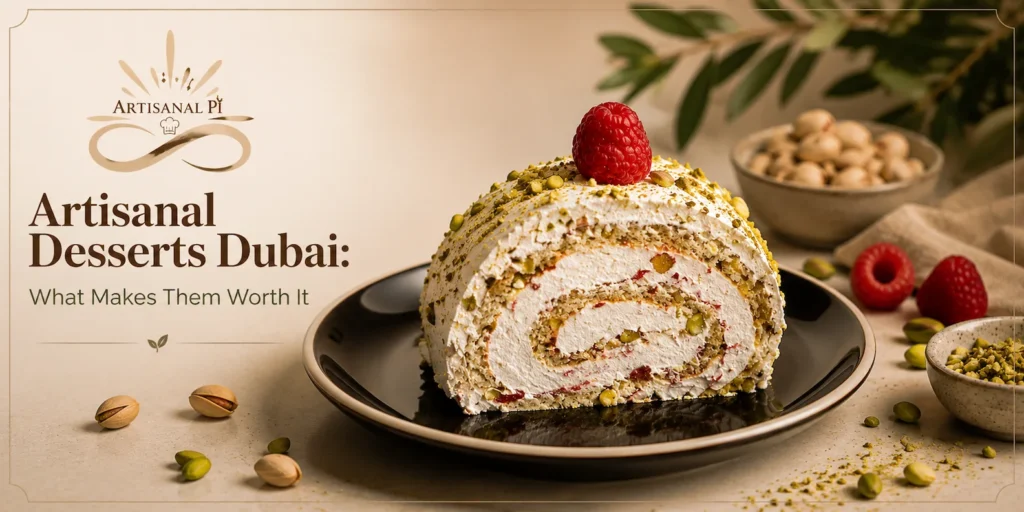
Dubai’s food scene has never done ordinary well. And right now, the dessert category is going through one of its most significant shifts — away from generic, mass-produced sweets and toward something that actually means something.
Artisanal desserts in Dubai are no longer a niche luxury. They’re becoming the standard that café owners, hotel F&B managers, and everyday consumers are actively demanding.
Why Artisanal Desserts Are Becoming a Defining Trend in Dubai
Dubai’s dining culture has matured fast. Guests who travel internationally — and most Dubai residents do — have eaten at exceptional restaurants, visited artisan patisseries in Paris, and tried small-batch chocolatiers abroad. They bring those expectations home.
Social media has accelerated this shift. A beautifully plated dessert doesn’t just satisfy a craving — it becomes content. In Dubai’s café market, content is currency. The Instagram-worthy cheesecake drives footfall. The handcrafted pistachio roll earns a story mention. Premium presentation now directly impacts revenue.
What Actually Makes a Dessert “Artisanal”?
The word gets used loosely. Here’s what it actually means:
- Small-batch production — made in controlled quantities, not factory lines. This preserves texture, flavour, and quality.
- Premium ingredients — European butter, real mascarpone, natural fruit, quality chocolate. Not emulsifiers designed for shelf life.
- Chef craftsmanship — developed by someone who understands pastry technique: lamination, tempering, emulsification.
- Hand-finished presentation — the visual finish is intentional, designed to be seen and remembered.
- Seasonal creativity — limited runs, chef-driven specials, and rotating menus that keep things interesting.
If a dessert doesn’t have most of these, it’s not artisanal — regardless of how it’s marketed.
Artisanal vs Mass-Produced Desserts: The Differences That Matter
| Factor | Artisanal | Mass-Produced |
| Ingredient quality | Premium, natural | Standardised, cost-driven |
| Taste | Complex, layered | Consistent but flat |
| Presentation | Hand-finished, unique | Uniform, generic |
| Shelf life | Short — freshness first | Extended via additives |
| Menu differentiation | High | Low |
| Customer perception | Premium, memorable | Forgettable |
| Pricing power | Higher margins possible | Race to the bottom |
The bottom line: mass-produced desserts fill a menu gap. Artisanal desserts build a brand.
Why Dubai Cafés Are Replacing Generic Desserts with Signature Creations
Walk through DIFC, JBR, City Walk, or Jumeirah on any given weekend. The cafés that are packed aren’t serving factory cheesecakes. They’re serving something with a story — a burnt Basque that took three months to perfect, a pistachio meringue roll that’s become a signature item people travel for.
Differentiation is survival in Dubai’s café market. With hundreds of new concepts opening every year, a generic dessert menu is a liability, not a neutral choice.
Premium desserts also support premium pricing. A handcrafted Opera Cake at AED 45 holds its price. A generic brownie from a wholesale distributor gets discounted within weeks.
How Artisanal Desserts Impact Food Cost and Profit Margins
This is where café owners sometimes hesitate — and it’s worth addressing directly.
Yes, artisanal desserts cost more per unit than mass-produced alternatives. But the margin math often works in their favour:
- Higher selling price — customers pay AED 35–65 for a premium dessert without blinking
- Lower waste — small-batch supply means you order what you need
- Reduced labour — outsourcing to a specialist supplier removes the cost of a pastry chef
- Better attach rate — a compelling dessert menu increases dessert orders per table
The real cost isn’t the unit price. It’s what a weak dessert menu costs you in missed revenue every day.
The Growing Demand for Health-Conscious Desserts in Dubai
Dubai’s consumer base is increasingly health-aware. Gluten-free, sugar-free, and vegan requests are no longer edge cases — they’re mainstream menu expectations.
- Sugar-free desserts are growing fast among UAE residents managing diabetes, weight, or simply cutting refined sugar
- Gluten-free options are in high demand from the city’s large expat community
- Vegan desserts are expected in any café that takes its menu seriously
A dessert supplier who can cover these dietary needs — without sacrificing taste or presentation — is genuinely valuable. Sol by Artisanal Pi is built exactly for this: refined sugar-free jams, gluten-free granolas, and clean-ingredient cookies that work for wholesale and consumer supply alike.
What Hospitality Buyers Look for in a Dessert Supplier in Dubai
Hotels and large F&B operators have different needs from a small café. Here’s what actually matters at scale:
- Batch-to-batch consistency — the San Sebastian on table 14 must taste identical to the one served six weeks ago
- Production capacity — can the supplier handle a 200-cover dinner service on a Friday night?
- Lead times — reliable delivery scheduling that fits your kitchen prep cycle
- Dietary range — halal compliance, allergen documentation, sugar-free and gluten-free options
- Packaging — desserts that arrive ready to plate, not requiring reconstruction by an overstretched kitchen team
If a supplier can’t clearly answer all of these, they’re not ready for hospitality-level supply.
From In-House Baking to Outsourcing: When Does It Make Sense?
Running a full in-house pastry operation sounds premium. In practice, it’s one of the most expensive and operationally difficult things a café or restaurant can take on.
Signs it’s time to consider outsourcing:
- Your pastry chef just resigned — again
- Dessert quality varies depending on who’s working that day
- You’re spending more on pastry ingredients than the dessert revenue justifies
- Your menu hasn’t changed in six months because recipe development takes too long
- You’re opening a second location and can’t replicate your dessert programme consistently
The Dark Side by Artisanal Pi is designed for exactly this moment. A curated wholesale menu of 10 chef-crafted desserts — San Sebastian cheesecake, Opera Cake, Tiramisu, Pistachio Meringue Roll, Flourless Brownie, and more — ready to supply cafés, restaurants, hotels, and cloud kitchens across Dubai. Less preparation. Less labour. More consistency. More profit.
The Next Step: Creating Exclusive Desserts Through Recipe Co-Creation
Wholesale supply solves the consistency problem. But what if you want something that’s genuinely yours — a dessert no competitor can copy because it was built specifically for your brand?
That’s where recipe development comes in. The process typically works like this:
- You brief a specialist on your concept, customer profile, and menu positioning
- A discovery session identifies the flavour direction and format
- A co-creation process develops and refines the recipe
- Taste sessions confirm the product hits the brief
- Production begins at scale
Artisanal Pi’s Palate Laboratory is built around this exact process — for cafés, hotels, and food entrepreneurs who want a signature product that belongs to them.
How Food Entrepreneurs Are Launching Dessert Brands Without Owning a Bakery
Private label manufacturing has made it genuinely possible to build a dessert brand without a single piece of baking equipment.
Here’s how it works in the UAE:
- You develop the concept — the flavour, the format, the brand identity
- A manufacturer handles production — recipes, ingredients, quality control
- Your branding goes on the packaging — it’s your product in the market
- You focus on sales, marketing, and distribution
The investment is in brand-building, not infrastructure. For food entrepreneurs in Dubai, this is the most capital-efficient route to market. Artisanal Pi’s Palate Laboratory supports private label clients through the full journey — from recipe concept to production-ready product.
Seasonal Dessert Trends That Shape Demand in Dubai
Dubai’s food calendar creates predictable demand spikes that smart operators plan for:
- Ramadan and Eid — date-based desserts, rose and pistachio flavours, elevated gifting formats, and family-sharing portions drive significant volume
- Dubai Shopping Festival — footfall surges across retail and F&B, rewarding cafés with compelling grab-and-go dessert offers
- Summer — lighter formats, frozen desserts, and fruit-forward options outperform heavy cakes during peak heat months
- Corporate gifting season — Q4 demand for branded, premium dessert boxes is substantial and growing
- F1 and major events — high-spending international visitors during event weekends raise the ceiling on premium dessert pricing
A good supplier should be able to support seasonal menu rotations, not just run a fixed catalogue year-round.
Choosing the Right Artisanal Dessert Partner in Dubai
Before you commit to a supplier, ask these questions:
- Can they show me samples from multiple batches — not just one?
- What’s their actual production capacity during peak periods?
- How do they handle dietary requirements — halal, gluten-free, sugar-free?
- Can they customise recipes or are they working from a fixed menu?
- What’s their delivery schedule and minimum order quantity?
- Do they have experience supplying hospitality operations at scale?
A supplier who can’t answer these clearly isn’t ready to be your partner. A supplier who answers them confidently and invites you to test the product first — that’s someone worth working with.
Why Dubai’s Dessert Industry Is Moving Toward Customisation and Craftsmanship
The direction is clear. Generic desserts will always have a market — but premium, differentiated, handcrafted desserts are where the growth is. Dubai’s consumers are paying more for quality. Dubai’s café operators are competing harder on experience. And Dubai’s food entrepreneurs are building brands, not just products.
The businesses that win in this market will be the ones that take their dessert programme seriously — whether that means upgrading their wholesale supply, developing exclusive recipes, or launching their own brand entirely.
If you’re ready to take that next step, Artisanal Pi works with cafés, restaurants, hotels, cloud kitchens, and food brands across Dubai — from wholesale supply to full private label co-creation. Reach out at business@artisanalpi.com or via WhatsApp at +971 56 124 1728.
Frequently Asked Questions
What are artisanal desserts?
Artisanal desserts are handcrafted in small batches using premium, natural ingredients and traditional or chef-developed techniques. Unlike mass-produced alternatives, they prioritise flavour complexity, visual presentation, and ingredient quality over shelf life and cost efficiency. In Dubai, artisanal desserts are increasingly associated with premium café and hotel menus.
Why are artisanal desserts more expensive than mass-produced ones?
Artisanal desserts cost more because they use higher-quality ingredients, require skilled labour, and are made in smaller quantities without industrial shortcuts.
Are artisanal desserts better for cafés and restaurants?
Yes — in most cases. Artisanal desserts command higher menu prices, differentiate your offering from competitors, and create the kind of memorable experience that drives repeat visits and social sharing.
How do Dubai cafés source premium desserts?
Most Dubai cafés source premium desserts through specialist B2B dessert suppliers who supply ready-to-serve or ready-to-plate products on a wholesale basis. This removes the need for an in-house pastry team while maintaining consistent quality. Suppliers like Artisanal Pi offer both a curated wholesale menu and custom recipe development services.
What should hotels look for in a dessert supplier?
Hotels need batch-to-batch consistency, production capacity at scale, reliable delivery scheduling, dietary range coverage (halal, gluten-free, sugar-free), and professional packaging. The supplier should have documented quality control processes and direct experience supplying hospitality operations — not just retail customers.
Are sugar-free and gluten-free desserts growing in the UAE?
Yes — significantly. Dubai’s health-conscious consumer base is driving consistent growth in sugar-free, gluten-free, and vegan dessert demand. Cafés and hotels that don’t offer dietary alternatives are losing covers to competitors who do. Sol by Artisanal Pi specifically addresses this gap with a clean-ingredient, refined sugar-free range.
Can a business launch a dessert brand through private label manufacturing?
Yes. Private label manufacturing allows you to develop, brand, and sell a dessert product without owning production equipment. A specialist manufacturer handles recipes, ingredients, and production — your branding goes on the packaging. In the UAE, this is an increasingly popular route for food entrepreneurs entering the premium dessert market.